

Braces vs Invisalign Kenya: 7 Essential Differences to Know Before You Choose
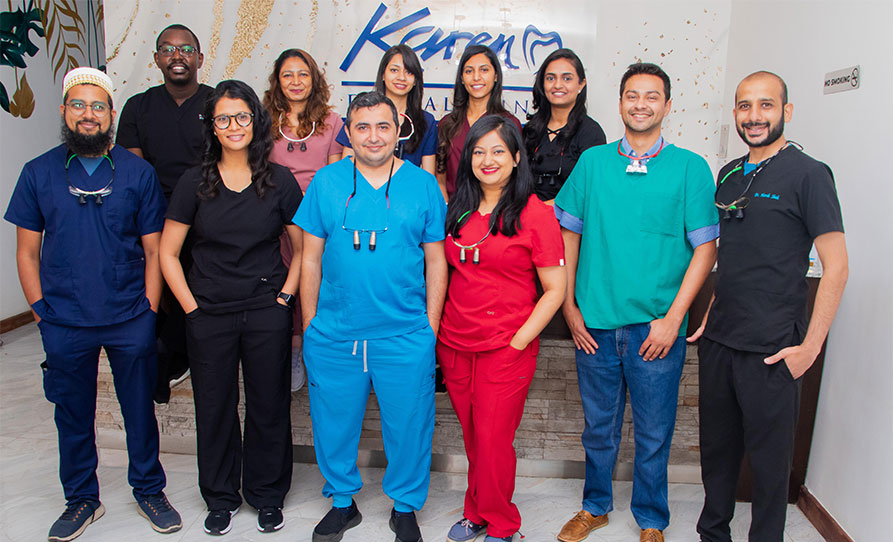
Quick answer: In the braces vs Invisalign Kenya decision, traditional braces are generally better for complex bite corrections and cost less upfront, while Invisalign is nearly invisible, removable for eating, and more comfortable day to day, but works best for mild to moderate cases and costs more. Karen Dental Clinic offers both, with three certified Invisalign providers and a dedicated orthodontic specialist on staff.
The braces vs Invisalign Kenya question comes up in almost every orthodontic consultation, and there is no single right answer. Both straighten teeth effectively. The real difference is in how each option fits into your daily life, your specific bite issue, and your budget. This guide breaks down the braces vs Invisalign Kenya comparison across the seven factors that actually matter for your decision.
Not sure which option is right for your smile?
Book Appointment Request ConsultationThe American Dental Association notes that both fixed braces and clear aligners are effective, evidence-based treatments for misaligned teeth, and that the right choice depends on the complexity of the case as much as personal preference. That is exactly how we approach the braces vs Invisalign Kenya conversation with every patient at Karen Dental Clinic.
Braces vs Invisalign Kenya: Quick Comparison
| Factor | Traditional Braces | Invisalign |
|---|---|---|
| Visibility | Clearly visible metal or ceramic brackets | Nearly invisible clear aligners |
| Removable | No, fixed for the full treatment | Yes, removable for eating and brushing |
| Treatment time | Typically 18-24 months | Typically 12-18 months for eligible cases |
| Cost | Generally lower upfront cost | Generally higher upfront cost |
| Best for | Complex bite and alignment issues | Mild to moderate misalignment |
| Diet restrictions | Avoid hard, sticky, and chewy foods | None, aligners are removed to eat |
1. Visibility
This is usually the first factor people raise in the braces vs Invisalign Kenya discussion. Traditional braces use metal or ceramic brackets and wires that are clearly visible when you smile. Invisalign uses clear, custom-moulded aligners that are difficult to notice in everyday conversation, which is why it has become popular with working professionals in Nairobi.
2. Comfort
Braces can cause irritation to the cheeks and lips, particularly in the first few weeks and after adjustments. Invisalign aligners are smooth plastic with no wires or brackets to cause friction, though a new aligner in the series can feel tight for a day or two as it applies gentle pressure to shift teeth.
3. Treatment Time
Traditional braces typically run 18 to 24 months depending on the complexity of the case. Invisalign can be faster for eligible mild to moderate cases, often 12 to 18 months, but severe misalignment may still require braces or a longer aligner program.
4. Cost
Cost is a major factor in the braces vs Invisalign Kenya decision for most families. Traditional braces generally carry a lower upfront cost. Invisalign's custom, lab-manufactured aligner trays typically cost more, though many patients feel the discretion and convenience justify the difference. A consultation gives you an accurate, personalised quote for either option.
5. Diet and Eating
Braces require avoiding hard, sticky, and chewy foods that can damage brackets or wires, including popcorn, chewing gum, and hard candy. Invisalign aligners are removed before eating, so there are no food restrictions at all, though they must be worn 20 to 22 hours a day to stay on schedule.
6. Oral Hygiene
Cleaning around fixed brackets and wires takes more effort and often requires specific tools like interdental brushes. Invisalign aligners are removed for brushing and flossing, so normal oral hygiene routines stay largely unchanged, one reason it is popular among patients focused on gum health.
7. Case Complexity
This is often the deciding factor in the braces vs Invisalign Kenya choice. Traditional braces can correct more complex bite issues, significant crowding, and severe rotations. Invisalign works best for mild to moderate misalignment and spacing. Dr. Komal Mandavia's fellowship training with the International Association for Orthodontics includes managing complex malocclusions with both approaches.
Which Should You Choose?
If your case involves significant crowding or a complex bite issue, traditional braces are often the more predictable choice. If your case is mild to moderate and you want a nearly invisible option with no food restrictions, Invisalign is likely the better fit. The only reliable way to know for certain is a full assessment, since the braces vs Invisalign Kenya decision really comes down to your specific bite, not a general rule.
Ready to find out which option fits your bite?
Book Your Appointment Request a ConsultationWhat Makes Karen Dental Clinic Different for Braces and Invisalign
A Dedicated Orthodontic Specialist, Not a General Dentist
Dr. Komal Mandavia completed her BDS at the University of Nairobi in 2011 and holds a fellowship with the International Association for Orthodontics, with a specific focus on managing complex malocclusions using both braces and Invisalign.
Three Certified Invisalign Providers
Alongside Dr. Mandavia, Dr. Henal Patel and Dr. Arisa Dar are both certified Invisalign providers, giving the clinic more Invisalign-trained dentists than most Nairobi practices. See the full team comparison in 5 Best Invisalign Providers in Nairobi.
Both Options, One Honest Recommendation
Because the clinic offers both braces and Invisalign, the braces vs Invisalign Kenya recommendation you receive is based on what your bite actually needs, not on which treatment the clinic happens to specialise in.
Ongoing Care Built Into the Same Team
Whichever option you choose, the same team monitors your progress, adjusts your treatment plan, and manages your oral health throughout, including teeth cleaning appointments alongside your orthodontic visits.
Frequently Asked Questions
Is Invisalign better than braces in Kenya?
Neither is universally better. In the braces vs Invisalign Kenya decision, Invisalign suits mild to moderate cases and offers more discretion and convenience, while traditional braces handle complex bite issues more predictably. The right choice depends on your specific case.
How much does Invisalign cost compared to braces in Kenya?
Invisalign generally costs more upfront than traditional braces, though pricing depends on the complexity and length of treatment. A consultation gives you an accurate quote for your specific case.
Can adults get braces or Invisalign in Kenya?
Yes. Both treatments work at any age, and a growing number of adult patients in Nairobi choose Invisalign specifically for its discretion in professional settings.
How long does Invisalign treatment take?
Invisalign treatment typically takes 12 to 18 months for eligible mild to moderate cases, though more complex spacing issues can take longer, similar to traditional braces.
Do braces or Invisalign hurt?
Both cause some pressure and mild discomfort, especially in the first few days or after an adjustment, as teeth shift into their new positions. This typically settles within a few days and is manageable with over-the-counter pain relief if needed.