

Dental Implants vs Bridges: Cost Comparison in Nairobi
You've lost a tooth. Maybe it happened during an accident, or gum disease finally took its toll. Now you're avoiding meat with friends because chewing is uncomfortable. You smile with your lips closed. You wonder if colleagues notice the gap when you talk.
Your dentist mentioned two options: dental implants or a dental bridge. Both can replace your missing tooth, but the costs are different, and you're not sure which is worth it long-term.
This guide breaks down everything you need to know about costs, durability, comfort, and which option gives you the best value for your money.
What Dental Implants Are

A dental implant is a titanium post surgically placed into your jawbone to replace the root of a missing tooth. Once the implant fuses with your bone (a process called osseointegration), a crown is attached on top, creating a tooth that looks, feels, and functions just like your natural tooth.
How Dental Implants Work
- Implant post: A titanium screw is placed into your jawbone
- Healing period: Your bone grows around the implant (3-6 months)
- Abutment: A connector piece is attached to the implant
- Crown: A custom-made tooth is placed on top
The result: A permanent tooth replacement that stands alone without affecting neighboring teeth.
Think of an implant as planting a new tree. The roots (implant) grow strong in the soil (your jawbone), and the visible part (crown) looks and functions like a natural tree.
According to the American Dental Association, dental implants have a success rate of over 95% and can last a lifetime with proper care.
What Dental Bridges Are
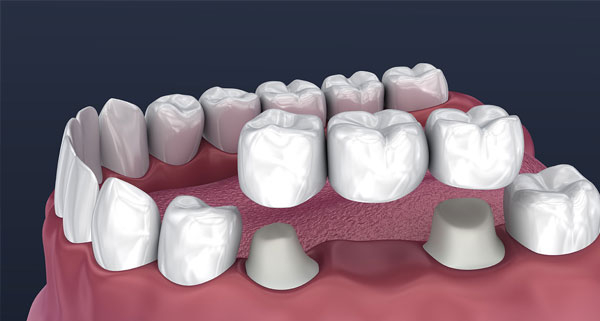 A dental bridge "bridges" the gap left by a missing tooth. It consists of a false tooth (called a pontic) held in place by crowns attached to the teeth on either side of the gap.
How Dental Bridges Work
- Preparation: The two healthy teeth next to the gap are filed down to make room for crowns
- Impression: A mold is taken of your teeth
- Temporary bridge: A temporary bridge protects your teeth while the permanent one is made
- Final bridge: The custom bridge is cemented permanently onto the supporting teeth
The result: A fixed tooth replacement that relies on neighboring teeth for support.
Think of a bridge like building an actual bridge across a river. The bridge (false tooth) is supported by pillars on both sides (crowned teeth). It works well, but it depends entirely on the strength of those pillars.
Implants vs Bridges: The Main Cost Differences
This is the question most Nairobi patients ask first: which one costs less?
Important: These are general cost ranges in Nairobi. Your actual cost depends on factors like the complexity of your case, the materials used, and the expertise of your dentist.
The upfront cost breakdown:
A dental implant costs more initially because it involves surgery, specialized materials (titanium is biocompatible and expensive), and multiple appointments over several months.
A dental bridge costs less upfront because it's a simpler procedure that doesn't require surgery. However, bridges typically need replacement every 10-15 years, which means additional costs down the line.
Get Your Personalized Cost Estimate
Get My Implant vs Bridge GuideWhat Affects the Cost in Nairobi
Why do costs vary so much between clinics in Nairobi? Here's what influences the price:
For Dental Implants:
- Implant brand and quality: European implants (Straumann, Nobel Biocare) cost more but offer proven longevity. Korean or Chinese implants are cheaper but may have shorter track records.
- Bone grafting needs: If you've lost bone in your jaw, you'll need a bone graft first (adds KES 20,000-50,000).
- Crown material: Zirconia crowns (most natural-looking) cost more than porcelain-fused-to-metal crowns.
- Surgeon's experience: Highly trained implant specialists charge more, but their expertise reduces complications.
- Technology used: Clinics with 3D imaging and guided surgery may charge more but offer higher precision.
For Dental Bridges:
- Number of teeth replaced: A 3-unit bridge (replacing one tooth) costs less than a 4-unit bridge (replacing two teeth).
- Material choice: All-ceramic bridges look best but cost more than metal-ceramic bridges.
- Preparation complexity: If the supporting teeth need root canals or other work first, costs increase.
- Lab quality: High-quality dental labs produce better-fitting, longer-lasting bridges.
Beware of extremely low prices. If a dental implant in Nairobi is offered at KES 40,000, ask questions. It might involve low-quality materials, inexperienced placement, or hidden costs that appear later.
Upfront Cost vs Long-Term Value
Here's where many Nairobi patients make a costly mistake: they choose the cheaper option upfront without considering lifetime costs.
Lifetime Cost Analysis (20-Year Period)
Dental Implant:
- Initial cost: KES 110,000
- Maintenance over 20 years: KES 5,000 (regular checkups)
- Total 20-year cost: KES 115,000
Dental Bridge:
- Initial cost: KES 70,000
- First replacement (year 12): KES 70,000
- Maintenance and adjustments: KES 15,000
- Total 20-year cost: KES 155,000
Long-term savings with implant: KES 40,000
Beyond money, consider these hidden costs of bridges:
- Damage to healthy teeth: Your supporting teeth must be ground down significantly. If those teeth develop problems later, you'll need more treatment.
- Bone loss: Without a root (implant) stimulating your jawbone, you'll gradually lose bone density in that area. This can affect your facial structure over time.
- Future complications: If one of the supporting teeth fails, the entire bridge fails, requiring more extensive (and expensive) work.
As noted by Mayo Clinic, dental implants help preserve jawbone density because they function like natural tooth roots, preventing the bone deterioration that occurs with bridges.
Which Option Lasts Longer?
🦷 Dental Implants
Lifespan: 25+ years to lifetime
- The titanium implant itself can last a lifetime
- The crown may need replacement every 15-20 years due to normal wear
- Success rate over 95% with proper care
- Doesn't rely on other teeth, so failure is rare
🌉 Dental Bridges
Lifespan: 10-15 years on average
- Depends on the health of supporting teeth
- May loosen or need repair over time
- Replacement needed every 10-15 years
- If a supporting tooth fails, entire bridge fails
What affects longevity:
- Oral hygiene: Both options require excellent brushing, flossing, and regular dental checkups
- Habits: Grinding teeth, chewing ice, or opening bottles with your teeth damages both implants and bridges
- General health: Diabetes, smoking, and gum disease reduce success rates for both options
- Quality of work: Expert placement and high-quality materials make a huge difference
Comfort, Appearance, and Function
Cost matters, but so does how your replacement tooth affects your daily life. Here's the honest comparison:
Appearance
Dental Implants: Look and feel completely natural. The crown sits where your natural tooth was, with natural gum contours. No one will know it's not your real tooth.
Dental Bridges: Can look very natural when done well, but the gum line may recede over time, revealing the bridge's base. The false tooth sometimes looks slightly different from natural teeth.
Eating and Speaking
Dental Implants: You can eat anything you could eat with natural teeth. Nyama choma, carrots, apples, tough foods pose no problem. Speech is completely normal.
Dental Bridges: Most foods are fine, but very sticky or hard foods can damage the bridge. Some patients report slight changes in speech initially, though most adjust quickly.
Oral Hygiene
Dental Implants: Brush and floss normally, just like your natural teeth. No special tools needed.
Dental Bridges: Require special floss threaders or water flossers to clean under the false tooth. More time-consuming daily maintenance.
Comfort
Dental Implants: After healing, you forget it's there. It feels like your natural tooth.
Dental Bridges: Generally comfortable, but some patients experience sensitivity in the supporting teeth, especially if they needed significant reduction.
Not Sure Which Option Is Right for You?
Talk to our experienced team. We'll examine your specific situation and recommend the best solution.
Book a Tooth Replacement ConsultWhen Dental Implants Are the Better Choice
Dental implants are typically the better long-term choice when:
- You want a permanent solution: You don't want to deal with replacements every 10-15 years
- You have healthy jawbone: Or you're willing to undergo bone grafting if needed
- The adjacent teeth are healthy: You don't want to damage good teeth to support a bridge
- You're missing multiple teeth: Implants can support bridges or dentures without affecting other teeth
- You want the most natural result: Implants look, feel, and function exactly like real teeth
- You're concerned about bone loss: Implants preserve jawbone density
- You can invest upfront for long-term savings: You're thinking beyond initial cost
Patient story: "I was hesitant about the cost of an implant. My dentist at Karen Dental showed me the math: over 20 years, the implant would actually cost less than replacing a bridge twice. Plus, I didn't want to damage my healthy teeth on either side. Four years later, I'm so glad I chose the implant. I literally forget it's not my real tooth." - James, 42, Nairobi
When Dental Bridges Are the Better Choice
Dental bridges may be the better option when:
- The adjacent teeth already need crowns: If the teeth on either side already have large fillings or damage, they'll need crowns anyway, so using them to support a bridge makes sense
- You can't have surgery: Medical conditions, medications, or personal preference rule out implant surgery
- You have insufficient bone and can't graft: Bone grafting isn't always possible or desired
- You need a faster solution: Bridges can be completed in 2-3 weeks, while implants take 4-6 months
- Upfront cost is your primary concern: You need a tooth replacement now and can't invest in an implant
- You're replacing temporary teeth: In very elderly patients, a bridge might outlast the patient's needs
Important: Bridges are not a "lesser" option. For many patients in specific situations, bridges are the smartest, most practical choice. The key is making an informed decision based on your circumstances.
Frequently Asked Questions
Which is more painful: dental implants or bridges?
Neither procedure is particularly painful with modern anesthesia. Implant surgery involves more healing time (3-7 days of mild discomfort), while bridge preparation causes minimal discomfort since you're just getting crowns. Most Nairobi patients report that post-procedure pain for both options is easily managed with over-the-counter pain relievers.
How long does each procedure take in Nairobi?
Bridges: 2-3 weeks total (2-3 appointments). First visit: tooth preparation and impressions. Second visit: bridge placement and adjustments. Implants: 4-6 months total. First visit: implant surgery. Healing period: 3-6 months. Final visit: crown placement. Some clinics offer same-day temporary crowns on implants.
Can I get a dental implant if I've had a missing tooth for years?
Possibly, but you may need bone grafting first. When a tooth is missing for a long time, the jawbone in that area deteriorates. A dental exam with X-rays or a CT scan will show if you have enough bone for an implant or if grafting is needed. We assess each case individual.
Does insurance cover dental implants or bridges in Kenya?
Most Kenyan dental insurance plans cover a portion of dental bridges since they're considered standard restorative treatment. Implants are less commonly covered or have lower coverage limits since they're often classified as elective. Check your specific plan. Our Karen Dental team can help you understand your coverage and explore payment plan options.
What happens if my dental bridge fails?
If a bridge fails (loosens, breaks, or a supporting tooth develops problems), it typically needs to be replaced. Depending on the condition of the supporting teeth, you might need a new bridge, or in some cases, those teeth may require extraction, leading to a larger gap that needs more extensive treatment. This is why choosing high-quality materials and maintaining excellent oral hygiene is crucial.
Can smokers get dental implants?
Yes, but smoking significantly reduces implant success rates (from 95% to 85% or lower). Smoking impairs healing and bone integration. Most dentists strongly recommend quitting smoking at least 2 weeks before implant surgery and during the healing period. At Karen Dental, we provide guidance on how to maximize your implant success if you smoke.
Why Karen Dental Clinic Is Trusted for Tooth Replacement in Nairobi
Choosing the right clinic for your dental implant or bridge is as important as choosing the right treatment. Here's why Nairobi patients trust our Clinic:
Experienced Specialists
Our team has placed hundreds of successful implants and crafted countless natural-looking bridges. Experience matters when it comes to complex restorative work.
Modern Technology
We use 3D imaging and digital impressions for precise planning and better results. Advanced technology means fewer complications and faster healing.
Quality Materials
We use proven implant systems and high-quality crown materials. We never compromise on quality to offer unrealistically low prices.
Honest Guidance
We'll tell you which option genuinely makes sense for your situation and budget. If a bridge is smarter for you than an implant, we'll say so.
Transparent Pricing
No hidden costs or surprise fees. We provide detailed written estimates before any treatment begins, so you know exactly what you're paying.
Payment Plans
We offer flexible payment options to make quality tooth replacement accessible.
Our process:
- Comprehensive examination: We examine your mouth, take X-rays, and discuss your goals and concerns
- Personalized treatment plan: We explain both implant and bridge options with honest pros and cons for your case
- Clear cost breakdown: You receive a written estimate before making any decisions
- Expert treatment: We perform your chosen treatment with skill, care, and attention to comfort
- Ongoing support: We provide aftercare instructions and schedule follow-ups to ensure success
Free consultation available: Not sure which option is right for you? Book a consultation at Karen Dental Clinic. We'll assess your situation, answer your questions, and provide honest recommendations.
Restore Your Smile now!
The best choice between dental implants and bridges depends on your unique situation, your goals, and your budget.
Compare My Options Today